
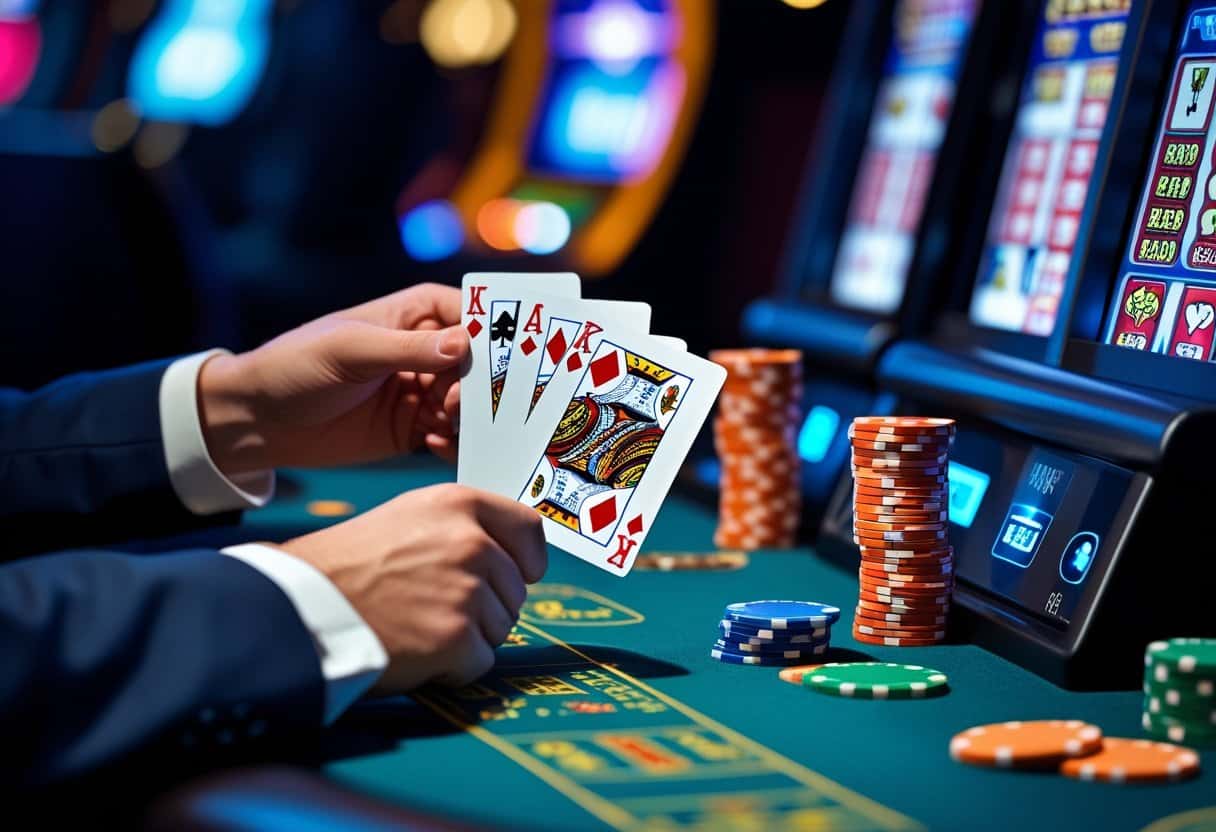
Poker is not merely a game of cards—it’s a psychological and mathematical battlefield where intellect, emotional control, and strategy converge. Over the decades, poker has evolved into one of the most respected and competitive skill-based games, played both recreationally and professionally. It’s a blend of probability, human behavior, and decision-making under pressure. Understanding poker requires much more than knowing hand rankings; it demands a disciplined mindset, sharp analytical thinking, and the ability to read opponents while managing uncertainty.
The True Essence of Poker
At its core, poker is a game of incomplete information. Players compete to win pots by either forming the best possible hand or persuading their opponents to fold. Every action—bet, call, raise, or fold—carries mathematical and psychological implications. What separates skilled players from novices is not the number of hands they play but how they make decisions when the odds and emotions collide.
Poker is often misunderstood as a game of chance, but in reality, luck plays only a short-term role. Over time, consistent success depends on logic, probability, and behavioral understanding. The best players view poker as a long-term investment of skill and discipline, where variance is simply a temporary obstacle on the road to profitability.
Understanding the Variations of Poker
While Texas Hold’em remains the most popular form globally, understanding other poker variations enhances strategic thinking and adaptability.
Texas Hold’em
Each player receives two private hole cards and uses five community cards to form the best hand. The complexity lies in reading the board texture, analyzing ranges, and predicting how opponents interact with the shared cards.
Omaha
A high-action variant where players are dealt four hole cards and must use exactly two with three community cards. The added combinations increase volatility, demanding sharper calculation of odds and stronger hand discipline.
Seven Card Stud
Once the most common form before Hold’em’s rise, Stud poker requires tracking visible cards and inferring opponents’ hands based on what is shown. It tests memory, observation, and patience.
Five Card Draw
This classic version emphasizes hand selection and bluffing. With limited shared information, intuition and betting psychology become crucial.
The Role of Probability and Mathematics
Math is the foundation of poker strategy. Every decision can be broken down into probabilities and expected values.
Calculating Pot Odds
Pot odds determine whether a call is profitable. By comparing the potential reward (the pot size) to the risk (the cost of a call), players can make mathematically sound decisions. For example, if you need to call $20 to win a $100 pot, your required winning percentage must exceed 20%.
Expected Value (EV)
Every action has an expected value, which measures the long-term profitability of that move. Consistently choosing positive EV actions ensures long-term success, even if short-term results vary.
Implied Odds
These go beyond immediate pot odds by considering future potential winnings if you hit your hand. Skilled players anticipate how much more they can extract from opponents when completing a strong draw.
The Psychology of Poker
Poker is a game of human behavior as much as numbers. Understanding the psychological aspects of your opponents—and yourself—is often the difference between winning and losing.
Reading Opponents
Observation is key. Betting patterns, timing, physical gestures, and even speech can reveal information. Online players rely on timing tells, bet sizing, and frequency to gauge opponents’ tendencies. Over time, you can categorize players as tight, loose, passive, or aggressive, and adjust your play accordingly.
The Art of Bluffing
Bluffing is not reckless deception; it’s a strategic maneuver. Successful bluffs tell a consistent story, one that logically aligns with your previous actions in the hand. The timing and credibility of a bluff are far more important than its frequency.
Emotional Discipline and Tilt Control
“Going on tilt” refers to making irrational decisions after a loss or frustration. Avoiding tilt separates professionals from amateurs. Emotional control means accepting variance, staying calm during bad beats, and remaining focused on the long-term outcome.
Game Theory and Advanced Strategy
Poker’s modern evolution is driven by Game Theory Optimal (GTO) principles, where players aim to develop balanced strategies that cannot be easily exploited.
Balancing Ranges
Instead of thinking in terms of specific hands, advanced players consider ranges—sets of possible hands an opponent could have. Balancing your own range means mixing strong hands, bluffs, and semi-bluffs in a way that keeps opponents guessing.
Exploitative Play
While GTO provides a defensive framework, real-world poker rewards players who exploit others’ tendencies. If an opponent folds too much, increase bluffs. If they call too often, value bet more aggressively. The best players switch seamlessly between GTO and exploitative strategies.
Positional Advantage
Position is power in poker. Acting last in a betting round provides more information and control over the pot. Being in position allows for wider hand selection and better bluffing opportunities, while being out of position requires tighter, more conservative play.
Bankroll Management: The Foundation of Longevity
Even the most skilled poker players can fail without proper bankroll management. Variance is unavoidable, and a solid financial plan is essential for long-term survival.
Establishing a Bankroll
Your bankroll should be separate from personal finances. A general rule for cash games is maintaining at least 20 to 30 buy-ins for your chosen stakes, while tournament players often need 50 to 100 buy-ins due to higher variance.
Avoiding Financial Pitfalls
Common mistakes include chasing losses, playing above one’s limit, and ignoring variance. Treating poker as a business—where discipline and tracking results matter—is crucial.
Tracking Progress
Serious players review their sessions, analyze hand histories, and identify leaks. Data-driven improvement helps correct mistakes and refine strategy over time.
The Role of Technology and Data in Modern Poker
Technology has reshaped the poker landscape. Online poker platforms, hand analysis software, and AI-driven tools have made studying the game more precise and accessible.
Solvers and Data Analysis
Poker solvers simulate optimal play based on mathematical models. While they cannot be used during live games, studying solver outputs helps players understand balanced ranges and theoretically correct strategies.
Online Poker Advantages
Online poker offers volume and diversity. Players can log thousands of hands quickly, gaining experience that would take years in live settings. The digital environment also sharpens decision-making speed and consistency.
Poker as a Mental Sport
Poker challenges the mind like few other games. It requires sustained concentration, mental endurance, and cognitive adaptability. Recognized globally as a mind sport, poker sits alongside chess in terms of intellectual demand.
Developing a Professional Mindset
Discipline, patience, and a hunger for learning define long-term winners. Successful players invest in studying opponents, reviewing hands, and improving mental resilience.
The Role of Confidence
Confidence—not arrogance—is crucial. Believing in your decisions, even when facing variance, builds composure and strategic clarity. Doubt leads to hesitation, and hesitation is costly in poker.
Ethics and Integrity in Poker
Maintaining fairness and integrity is non-negotiable. Poker’s reputation as a skill-based game depends on transparency and respect among players.
Fair Play
Whether online or live, cheating, collusion, and unethical practices harm the community. Upholding honesty ensures the game remains a contest of skill rather than manipulation.
Responsible Gaming
While poker is skill-based, it involves risk. Responsible gaming includes setting limits, recognizing signs of addiction, and maintaining balance between entertainment and competition.
The Human Element: What Makes Poker Truly Unique
Poker’s beauty lies in its reflection of life. It teaches patience, risk assessment, and emotional control—qualities that extend far beyond the table. Every hand, win or lose, is a lesson in strategy and psychology.
Great poker players understand that mastery comes not from winning every session but from making consistently correct decisions. They analyze each move, adapt to evolving dynamics, and respect the complexity of human behavior that defines every hand played.
FAQs About Poker
What is the most important skill to develop in poker?
Discipline. Whether it’s folding marginal hands, managing your bankroll, or avoiding tilt, discipline ensures consistent, logical decisions.
Can poker truly be a long-term career?
Yes, many professionals make a living from poker. However, it requires strong emotional resilience, deep study, financial control, and a professional approach.
How can I spot a bluff effectively?
Look for inconsistencies in the story an opponent’s bets tell. If their actions don’t align with the community cards or previous patterns, they might be bluffing.
Does poker favor aggressive players?
Generally, yes. Controlled aggression—betting and raising with purpose—creates pressure and forces mistakes. However, reckless aggression without strategy leads to disaster.
Is online poker harder than live poker?
Online poker tends to be tougher due to the sheer volume of hands and data-driven players. Live poker offers more psychological and social dynamics, which can be leveraged for an edge.
How do professionals deal with losing streaks?
By detaching emotionally from short-term results. They review sessions analytically, trust their process, and maintain bankroll discipline. Variance is part of the game.
What’s the biggest misconception about poker?
That it’s primarily about luck. In truth, luck influences short-term outcomes, but over time, consistent strategy and skill always prevail.
